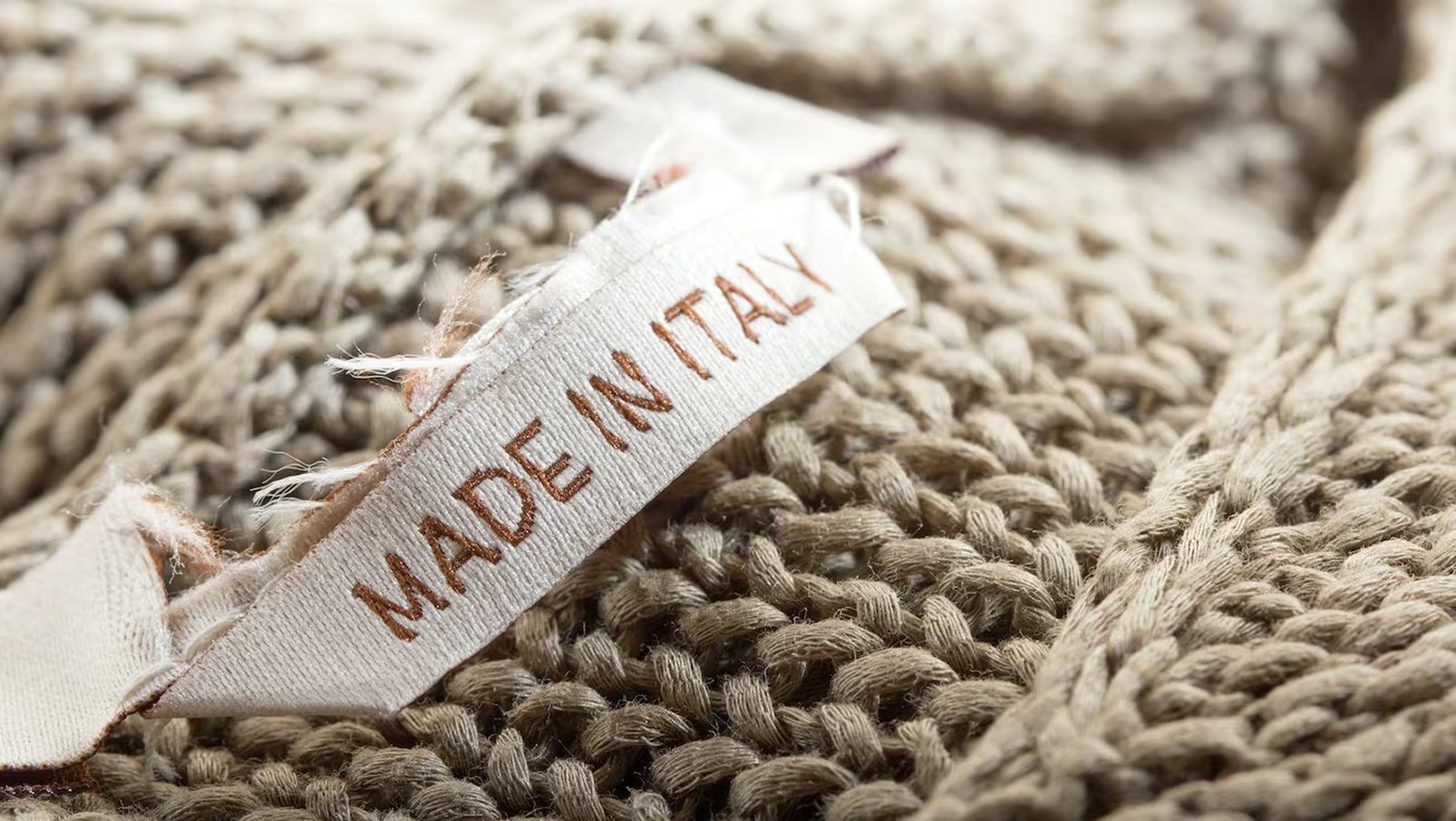
Manufacturing Insights 2026: Italy
How to find the right manufacturing partner — and why Made in Italy matters
Italian fashion manufacturing is about far more than quality. It is an ecosystem of specialist companies, craft skills and long-standing relationships that enables brands to work with relatively small production runs. But to unlock these advantages, brands need to understand where to look, how to build relationships and, crucially, what they are actually paying for.
At the Trendsite online session Manufacturing Insights 2026: Italy on 14 September 2026, Matteo Bardi, a consultant specialising in fashion manufacturing and brand development, shared a practical view of how Italy’s manufacturing system works — and how young and independent brands can navigate it.

Matteo Bardi
An expert in Italy’s fashion manufacturing clusters and industry trends, Matteo has more than 20 years’ experience working with international fashion brands, advising on product development, manufacturing strategies and trend analysis.
6 takeaways for brands looking to manufacture in Italy
Define the product before you look for the factory
There is no single ‘Italian factory’. Italy’s manufacturing system is organised around specialist regions: some are known for textiles and cashmere, others for silk and printing, leather, footwear or knitwear.
So the first question should not be ‘Where can I find a factory?’ but ‘What exactly do I want to produce?’
In footwear, for example, the right partner will depend on the product. Classic men’s shoes, elegant pumps, sneakers and summer sandals all require different manufacturing expertise.
Once you have defined the style you want to make, you need to choose the right workshop. Not everyone can make the same type of product.
This specialisation is one of Italy’s key strengths. Manufacturers often spend decades developing expertise in a specific technology or product category.
Find your factory through the people already inside the supply chain
One of Matteo’s most practical recommendations is not to search for a manufacturing partner blindly online.
For apparel, fabric and material suppliers can be a natural entry point. At Milano Unica, for example, brands can connect with textile manufacturers, while Lineapelle brings together companies working with leather and other materials.
But the value of trade fairs goes beyond the materials themselves.
The company making the fabric knows everyone. You can be introduced by the fabric manufacturer to the clothing manufacturer.
A material supplier can therefore become a route to the right production partner — particularly for smaller brands that have yet to build their own network in Italy.
Matteo also recommends studying exhibitor lists in advance rather than simply turning up to ‘see everything’. From hundreds of companies, identify those that are most relevant to your product and manufacturing requirements.

Small production runs are not necessarily a barrier
This is where the Italian model can be particularly attractive to emerging brands.
According to Matteo, many independent Italian manufacturers are willing to work with very small quantities — from a single sample to several prototypes or a small first production run. This flexibility can even extend to companies that also manufacture for some of the world’s largest fashion brands.
Even if they do 90% of their production for Prada or Ferragamo, they leave room for young designers.
There is, however, an important caveat: the constraint may lie not with the factory, but with the material.
If a brand requires a custom fabric colour, for example, the supplier may impose a much higher minimum order quantity. Choosing from an existing colour palette, however, can make it possible to start with a much smaller run.
For an emerging brand, the strategy can therefore be simple: stay flexible on materials at the beginning rather than requiring every detail to be developed exclusively for you.
Italy’s advantage is not low cost — it is accumulated expertise
Italy is not necessarily the right choice when the primary competitive advantage of a product is the lowest possible manufacturing cost.
For high-volume, cost-driven production, other manufacturing markets may be more appropriate.
But when a product requires complex processes, premium materials, precision and highly developed craft skills, the equation changes.
It comes down to human expertise. What Italian makers achieve simply cannot be replicated in China.
Matteo uses textiles and digital printing as an example: the technology itself is only part of the equation. Equally important is understanding how a material behaves after processing, washing and other stages of production.
This is where Italy’s distinctive advantage lies: the practical knowledge of people who may have spent decades working with a particular technology or technique.
Italy is therefore particularly strong in the mid- to high-end segments, where manufacturing expertise becomes part of the value of the product itself.
Made in Italy needs to be created — and communicated
Italian manufacturing inevitably comes at a higher cost. Premium materials, process controls, manufacturing standards and sustainability requirements all carry a price.
As Matteo points out, a brand cannot simply build its business model around the idea: ‘We made it in Italy at a high cost, so now we can charge a high price.’
The customer needs to understand what they are paying for.
You have to tell the story. Explain how it was made, where it was made, and why it is a limited edition.
Matteo gives the example of a designer who created handmade bags embellished with Swarovski crystals but was selling them for around €300. His advice was fundamentally different: first build the product story and communicate what makes it distinctive, then set a price that reflects that story.
The implication for brands is clear: Italian manufacturing is not only a sourcing strategy; it is part of the brand strategy.
If a brand chooses Italy for its quality, craftsmanship, material provenance or hand-finishing, those attributes should become part of the story communicated to the end customer.
In Italy, relationships come before business
Perhaps Matteo's most human insight is also one of his most practical.
Personal relationships remain highly important within Italy's manufacturing culture. A manufacturer wants to understand not only the potential order volume, but also the designer behind it — their aesthetic, approach and attitude towards the product.
They really want to get to know the designer, to share the same concept and the same idea.
This is why visiting a production facility is more than a formality. Meet the owner, speak to the pattern cutter and the people directly involved in making the product, and look closely at the samples.
Sometimes the most effective business development happens far beyond the meeting room.
Here, and in China too, you do business over lunch and dinner with entrepreneurs. You meet people, exchange information, share energy — and that is how you find your supplier.
In Italy, this can be particularly significant: the right manufacturing partner can become more than a supplier. They can become part of your team.
Italy is not a factory. It is an ecosystem.
This is perhaps the central takeaway from the conversation.
Italy's strength does not lie in having one ‘best factory’. Quite the opposite: the choice is so extensive that the challenge is often knowing how to identify the right partner from hundreds of capable businesses.
If you want to make this kind of shoe, with this heel and a snake around the shoe, you can find hundreds of companies that can make it. The question is: which one is the right one?
Successful sourcing in Italy therefore starts long before an order is placed: with defining the product, understanding the market and materials, identifying the right cluster and building recommendations through the professional network.
And it does not end with signing the first contract. It ends with building a long-term relationship.
One more lesson: don't only look forward
Matteo's discussion extended beyond manufacturing itself. Speaking about craft skills, he offered a surprisingly contemporary perspective: sometimes innovation is not about inventing something entirely new, but about bringing something lost back into the present.
If a region was once known for a particular technique, material or craft, that heritage can become the foundation for a new business.
You don't need to invent too much. Do what already existed, what represents you now, and do it again.
For brands, this is a powerful idea: competitive advantage can come not only from new technologies, but from regional heritage, forgotten techniques, local knowledge and human skills.
Perhaps this is why the Italian manufacturing model remains so relevant. It connects heritage with the contemporary market — bringing together craft, industry, design and business.
Matteo's practical advice can ultimately be distilled into one formula: Find your product. Find your region. Find your people. Then build your production network.
What to know: a map of Italy's manufacturing clusters
Italy is home to dozens of specialist manufacturing territories. When looking for a production partner, it therefore makes sense to start with the right region rather than a specific factory.
- Biella — premium wool and high-grade cashmere
- Como — silk, jacquards and high-precision textile printing
- Tuscany — leather manufacturing, leather apparel and premium bags
- Veneto — complex and creative women's footwear, including high heels
- Marche, particularly Civitanova Marche — denim processing and manufacturing, streetwear and sneakers
- Campania, particularly Naples — classic men's tailoring and traditional footwear, including sandals
- Puglia — more accessible and scalable footwear production
A practical sourcing route: define your product category and price positioning → identify the relevant manufacturing cluster → research material suppliers → use their networks to find specialist workshops and factories → visit in person and start building relationships.
This approach turns Made in Italy from a simple country-of-origin label into access to a specific and highly developed manufacturing expertise.